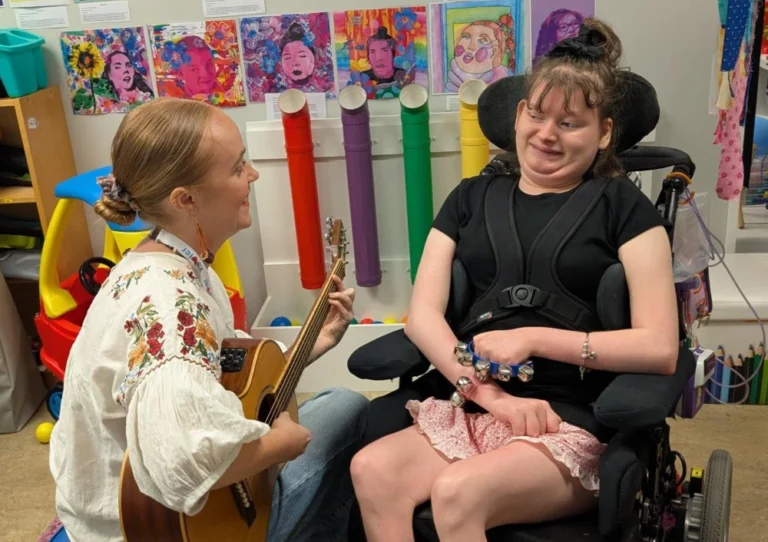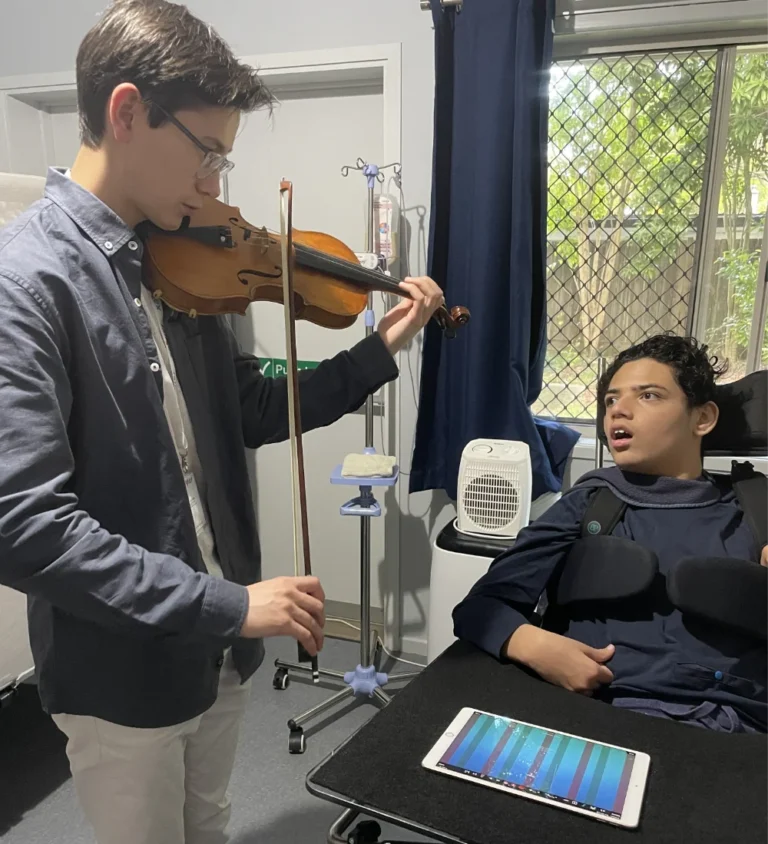
For children and young people with complex disability, music can be a powerful tool for expression, participation and connection. Music therapy uses the natural qualities of music, such as rhythm, melody and repetition, to support communication, physical development and emotional wellbeing in ways that are engaging, child-led and meaningful.
Supporting emerging music therapists
We are proud to support emerging music therapists like James, a second-year Master of Music Therapy student at the University of Melbourne, who is completing a clinical placement with the Xavier allied health team.
From performance to therapy
With a professional background in performance and vocal coaching, for James, music has always been not only his passion but a way to connect with others. An eager learner, James completed a thesis in vocal pedagogy on breath work and regulation for performers.
“This research deepened my understanding of how the voice and body connect emotionally and physiologically and I became increasingly drawn to learning more about how these principles could be applied in therapeutic settings,” adds James.
However, it was a deeply personal experience that was the turning point that led James to music therapy.
“During my stepdad’s time in palliative care, music became one of the most meaningful ways we could connect,” James shares. “In such a vulnerable and emotional time, music helped us be present together and share something beyond words.”
The power of music therapy
That experience stayed with James and throughout his studies he became more interested in the ways in which music therapy can support children and young people with complex disability.
“Music therapy can open up different ways of engaging for children so that they are able to express themselves, connect with their peers and work towards their own unique therapy goals,” he explains. “It can help regulate the nervous system, support motor skills and encourage social interaction. And importantly, of course, it brings joy.”
A day in the life at Xavier
Each day at Xavier is a little different for James, shaped by the unique needs of the children and young people he works with. His time usually includes a mix of one-on-one music therapy sessions, co-facilitated visits with other therapists and reflective debriefs with music therapist Becca to discuss progress and plan next steps.
Some days also involve home visits, which James finds especially meaningful as they offer insight into the child’s world beyond the therapy room. Much of his work focuses on listening closely, being fully present and responding musically to each client’s needs in the moment — whether that means improvising a rhythm, adapting a familiar song, or simply sharing a moment of connection through sound.
“It’s not about performance,” he says. “It’s about presence. Being with a child in a moment of connection is at the heart of music therapy.”
James says his experience at Xavier has been deeply rewarding.
“The team here is incredibly supportive and the children and young people I’ve had the privilege to work with have taught me so much about creativity, resilience and the power of being truly seen and heard.”
What’s next for James?
As James continues his journey toward becoming a registered music therapist, we are grateful to play a part in his training and excited to see the difference he will make in the lives of others.
Once James graduates, he hopes to work in a setting where he can combine his creative skills with therapeutic practice ideally with young people or neurodiverse populations. “I’d love to continue integrating songwriting, voice work, and symbolic expression into my therapy approach. Over time, I’d also like to contribute to making music therapy more accessible to marginalised communities,” said James.
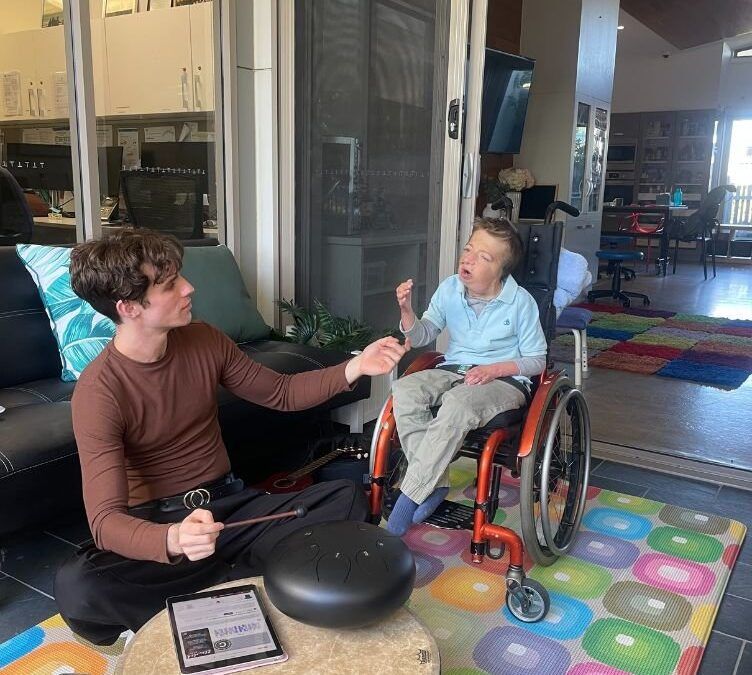
*James is pictured in a music therapy session with Tim at Xavier Place.